
Paris, Unbuttoned
A Parisian photo essay, travelogue and series of vignettes of this beautiful city

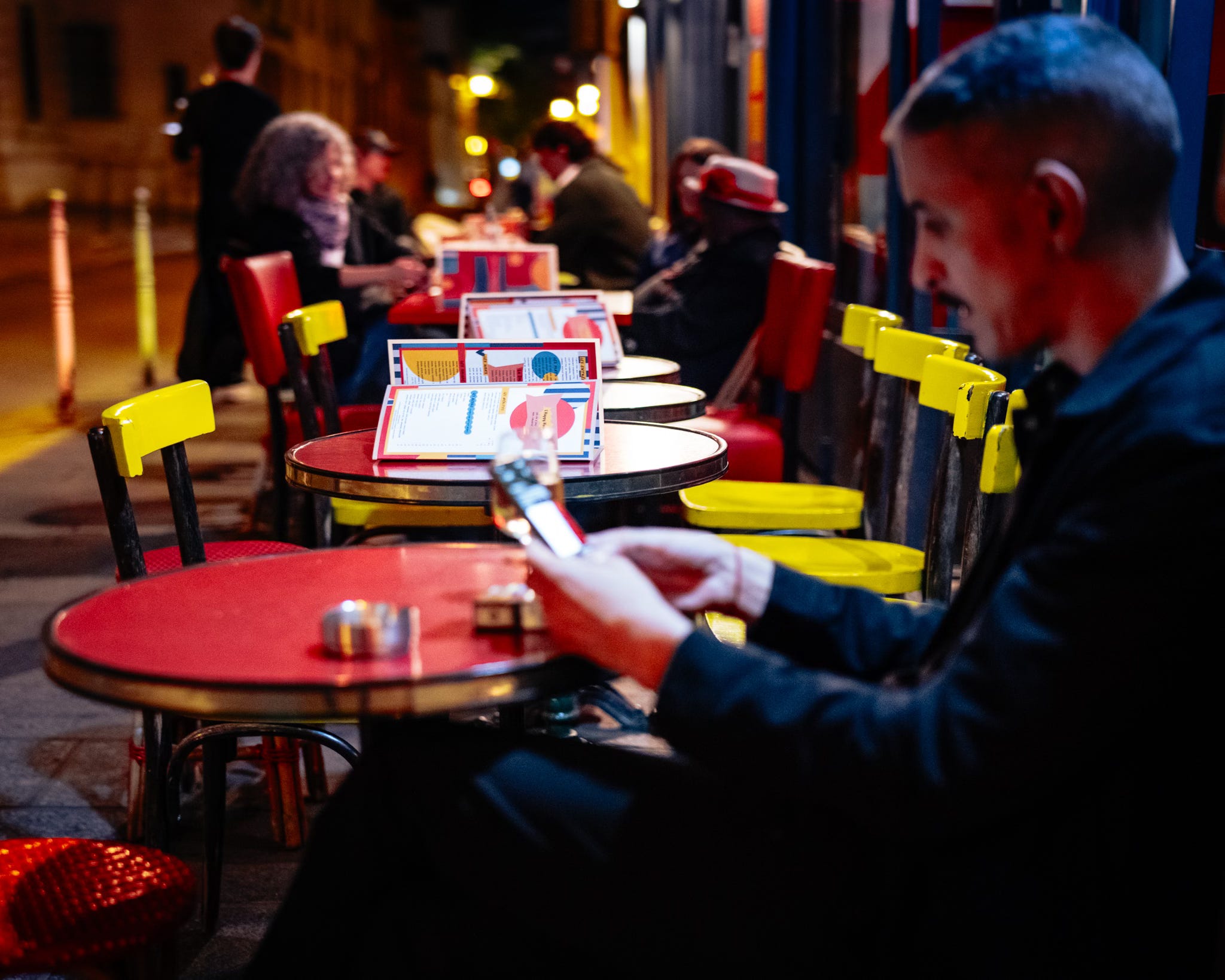
Paris at night doesn’t glow—it leaks. It spills amber onto wet asphalt, it smears itself across your lens like a thumbprint, and it dares you to call it beauty without first admitting you’ve been seduced.
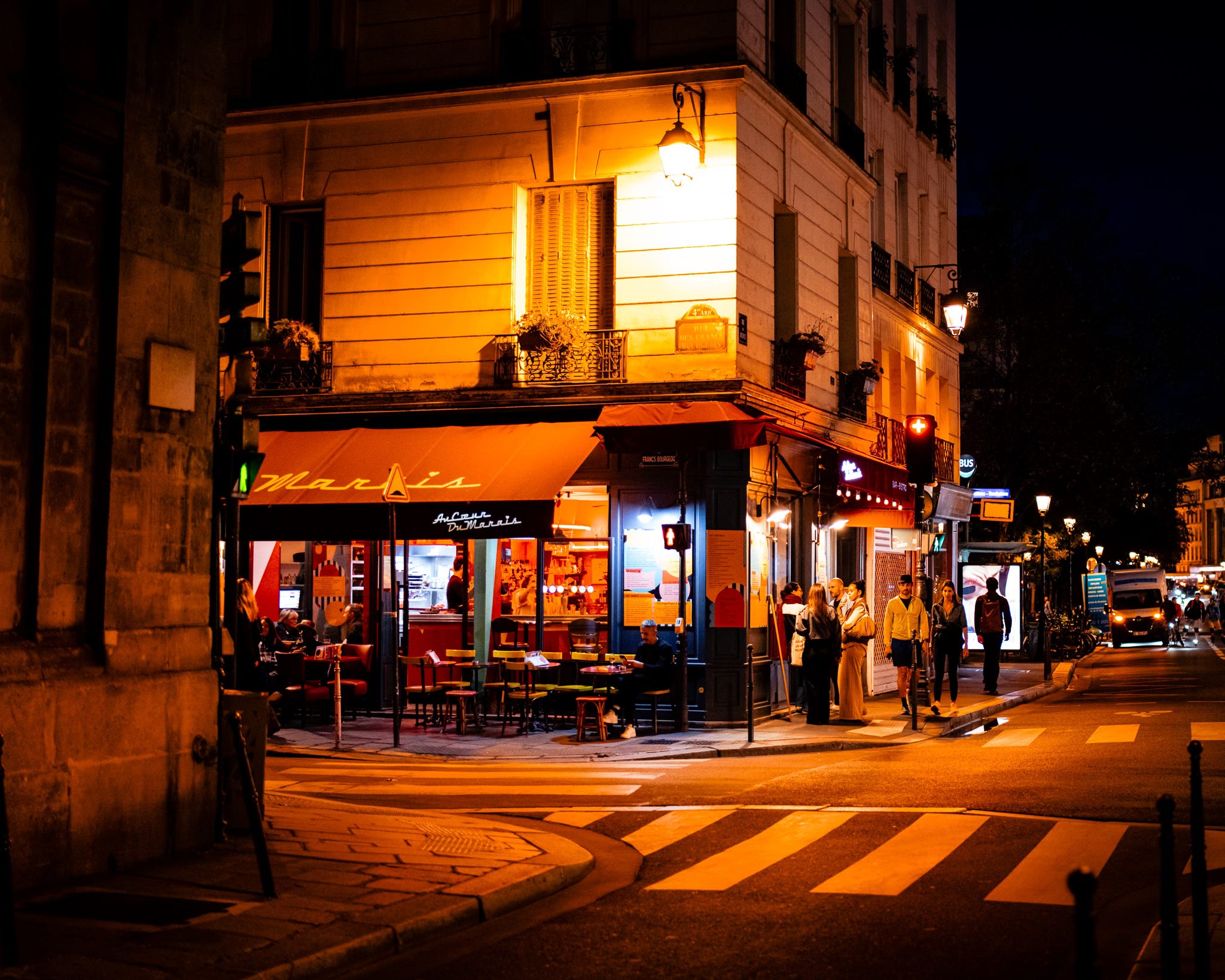
I went out with no itinerary, which is the only honest way to walk this city. Paris has never cared for your plans. It prefers you a little lost, a little hungry, a little vulnerable—so it can begin its work. It starts with the street, always the street: the impatient choreography of bodies, the sudden flare of a café, the scandal of colour against old stone, the shadow that turns a stranger into a parable.
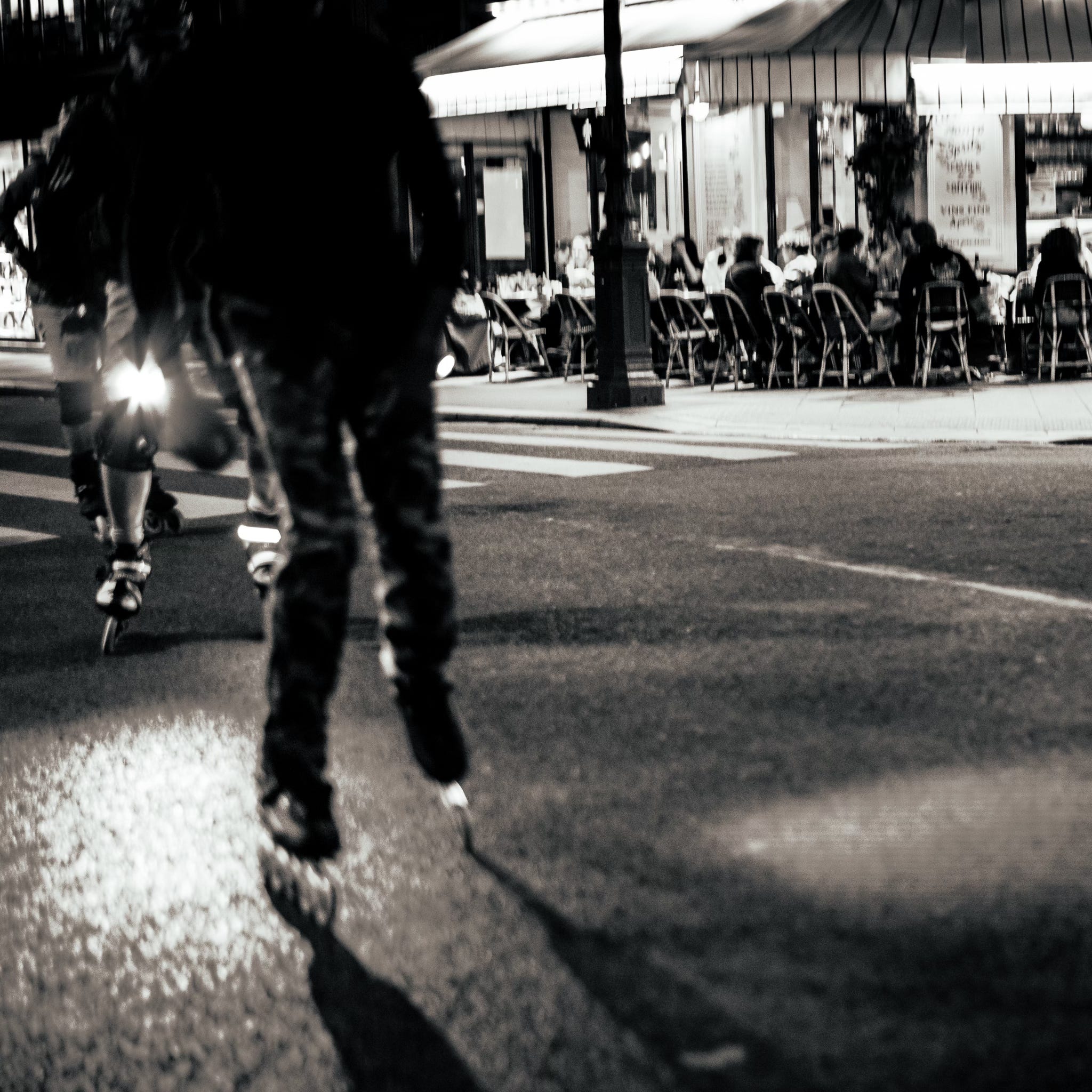
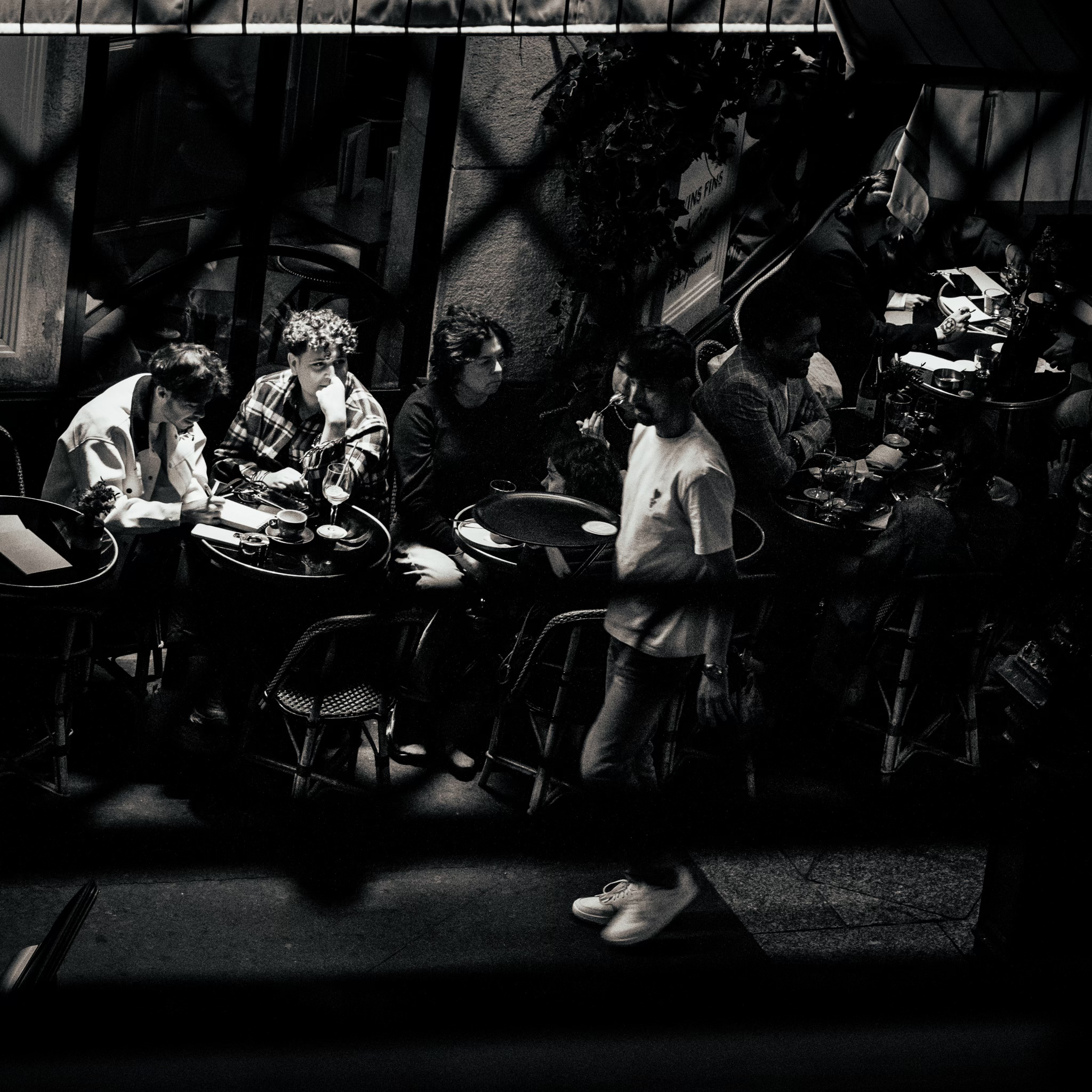
There’s a particular kind of Parisian night where the pavements look freshly invented—rain-polished, reflective, electric. You stand at a crossing and the city comes at you in blur and velocity: wheels, legs, headlights, a rush of figures moving like they’ve been told they have exactly one life and not a second more. In the background, the cafés perform their perpetual ritual—rows of chairs aligned like prayer beads, faces leaned in, mouths working, hands carving the air. You can almost hear the laughter even when the photograph goes silent.
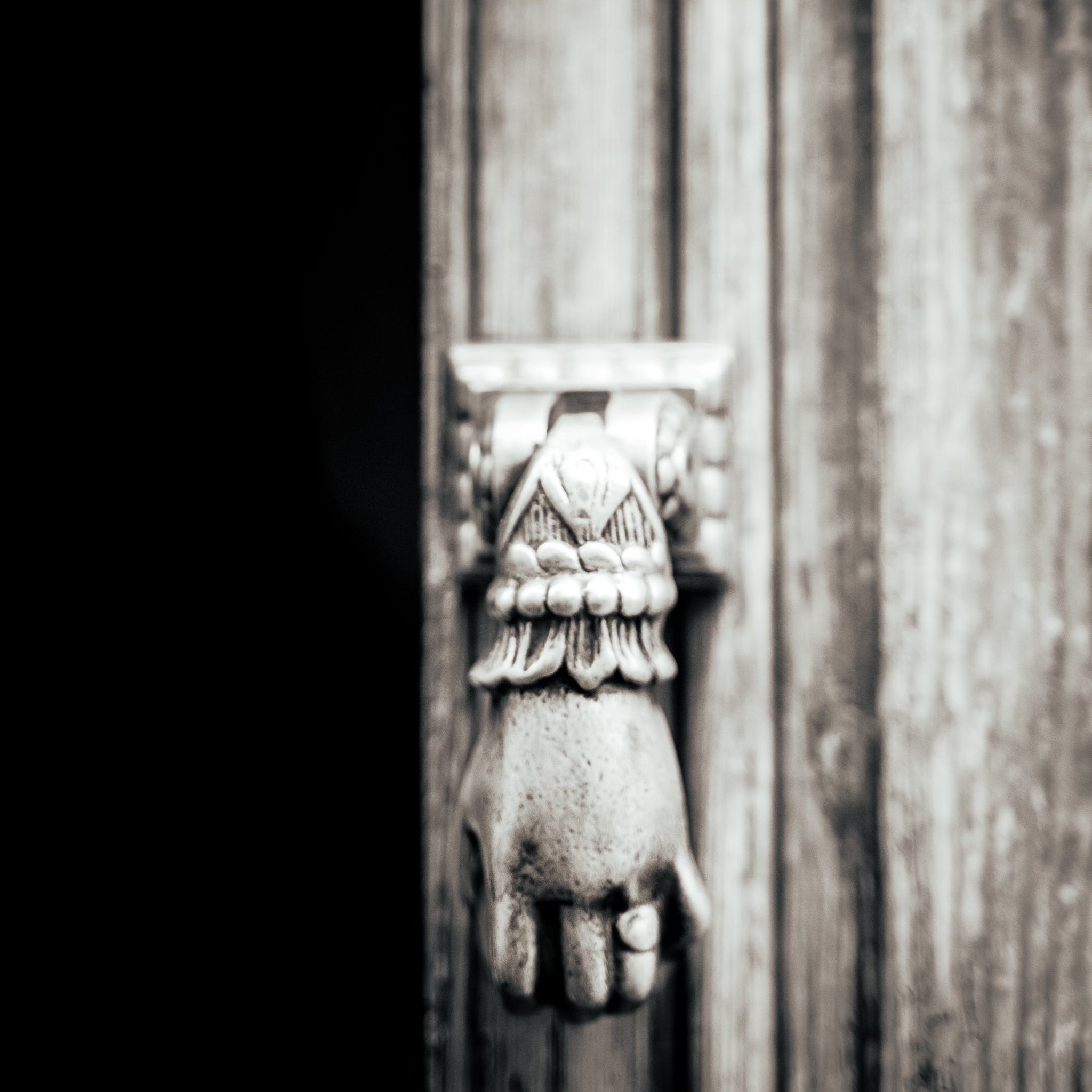
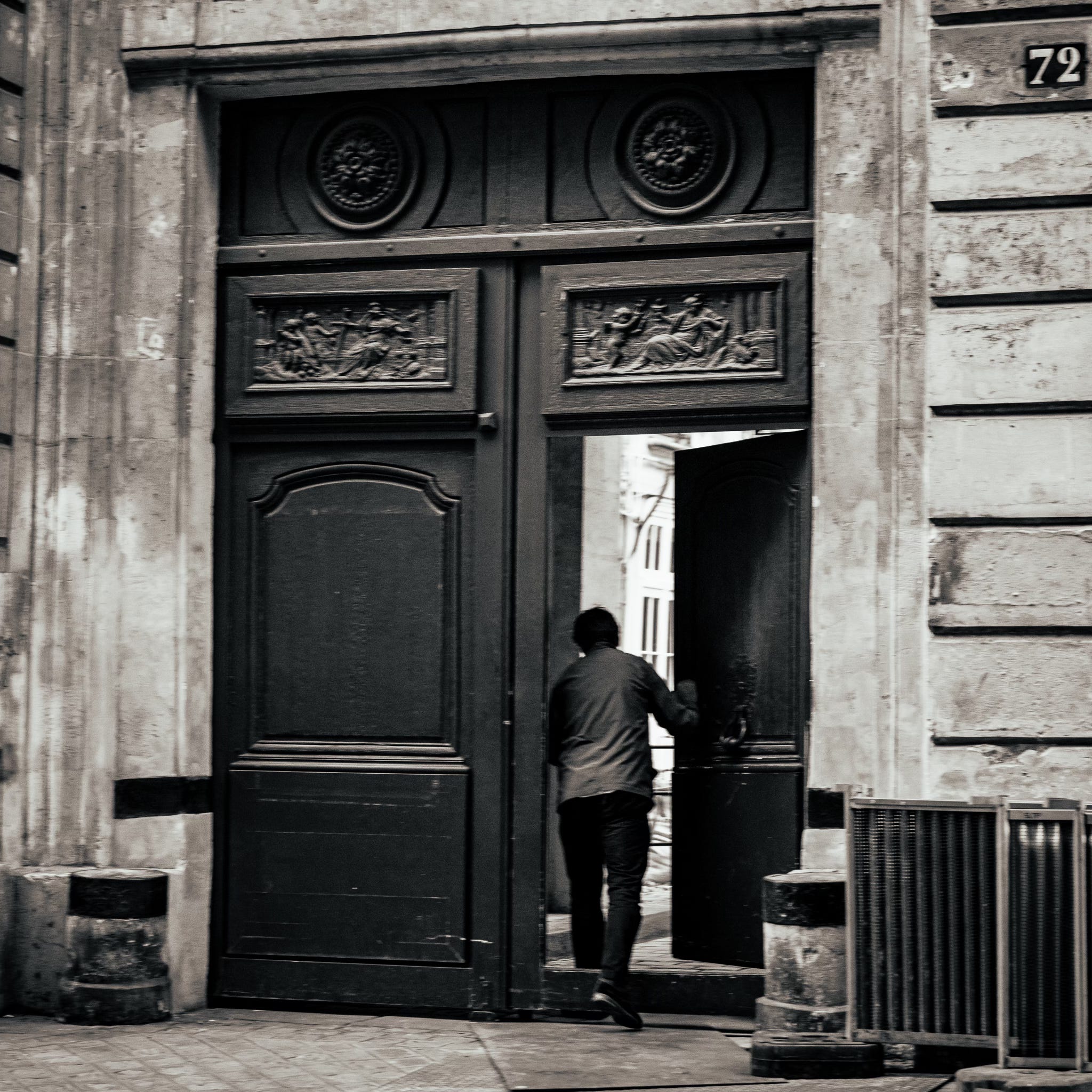
Then, just as quickly, Paris becomes intimate. A door. A handle. A metal hand reaching out of an old wooden slab as if the building itself wants to touch you. The city is full of these small relics—ornamental, unnecessary, perfect. They remind you that Paris doesn’t merely function; it flirts. It decorates even its thresholds, as if to say: you may enter, but you will not enter unchanged.
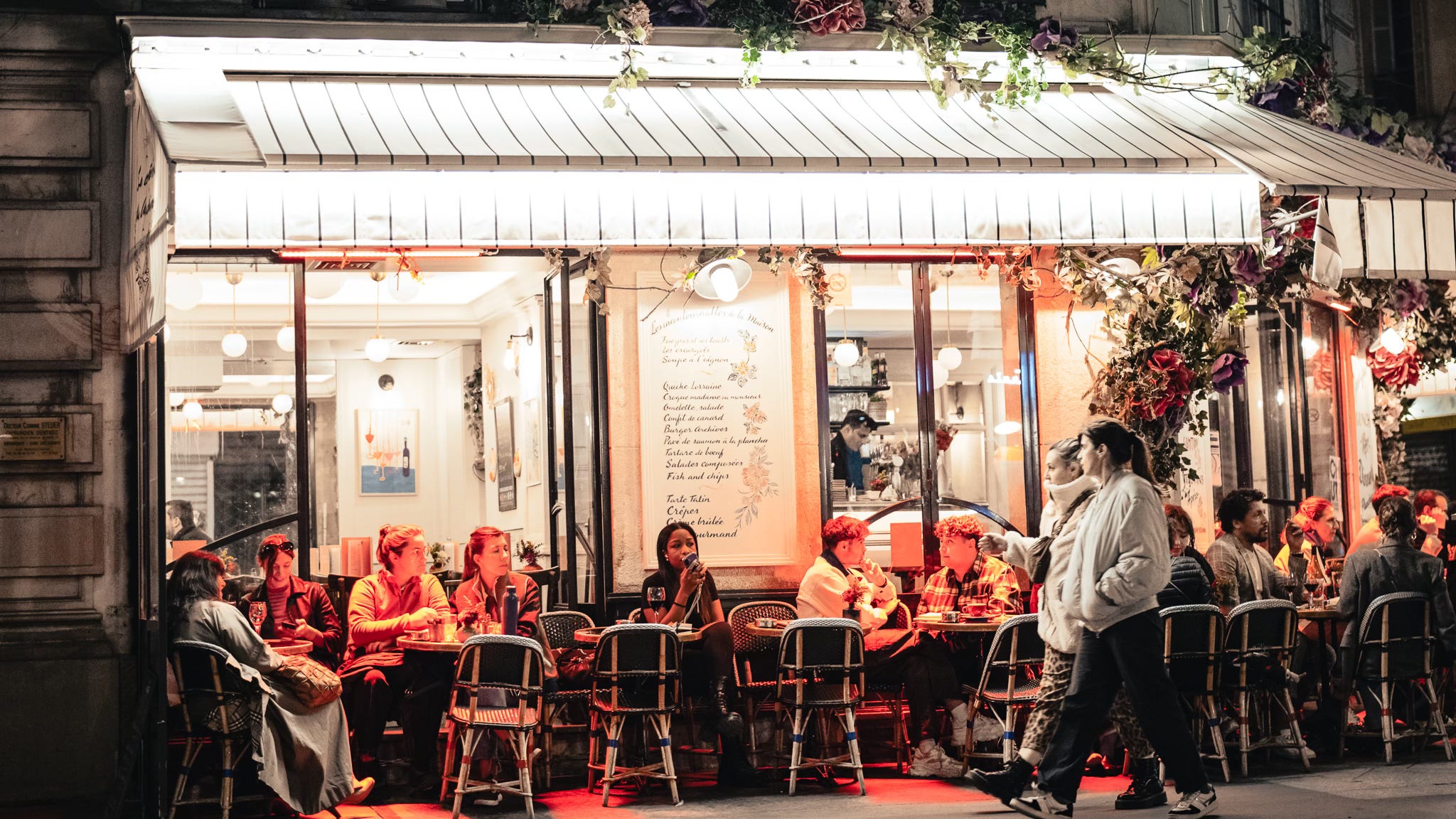
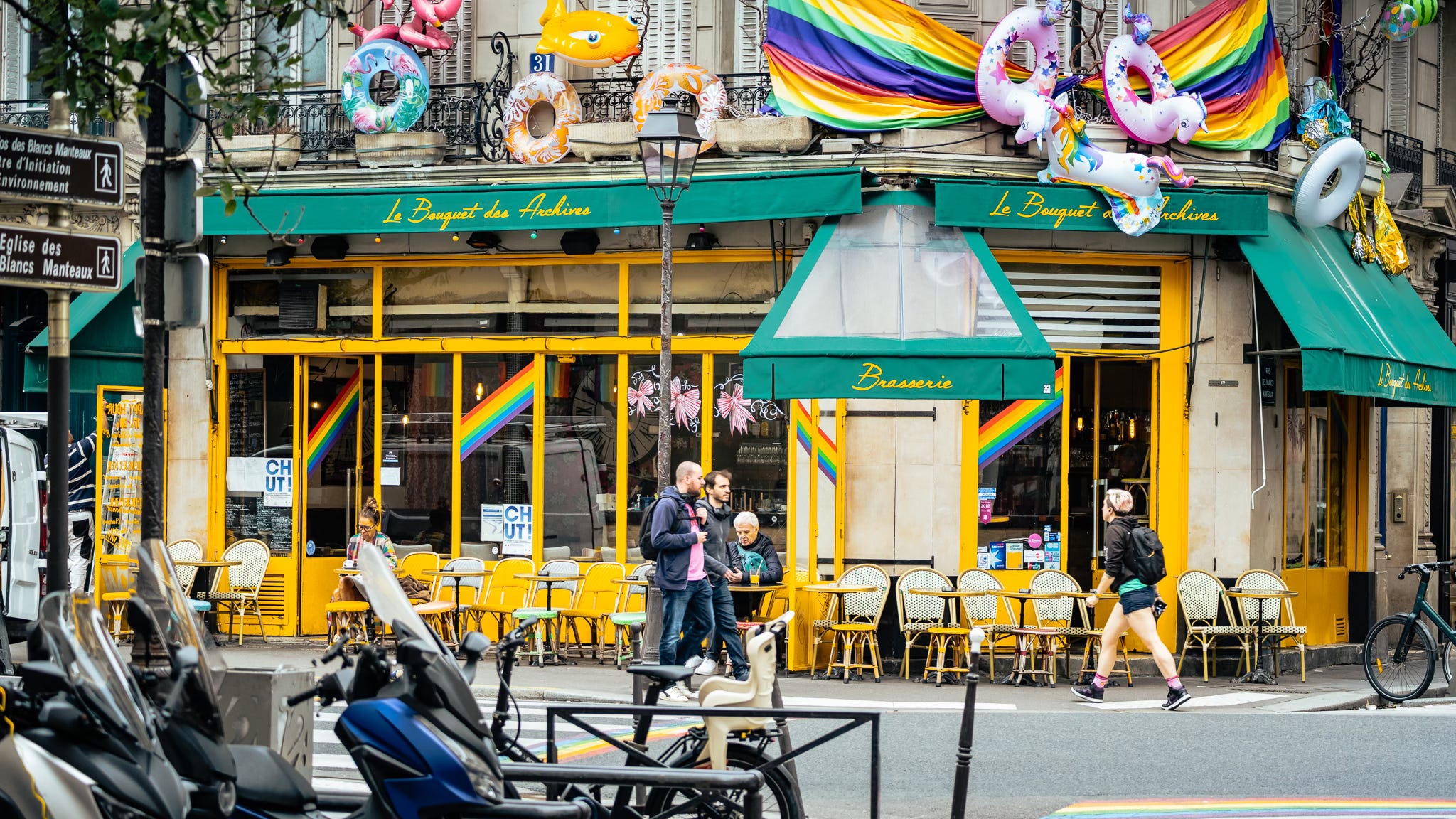
And the colour—Christ, the colour. Not the tasteful kind that behaves. The defiant kind: molten streetlight, orange awnings, crimson tables, yellow chairs like punctuation marks in the dark. A corner brasserie glows as though it’s running on something more volatile than electricity—wine, conversation, possibility. People gather at the edges of that light the way moths gather at a lamp, not for warmth exactly, but for the illusion that warmth is a choice.
Yet in the same breath, the city pulls the rug out from under you and goes monochrome—because some truths don’t require colour. In black and white, Paris turns anatomical. It reveals the hard bones of doors and stone, the chipped paint and the scuffed history, the way a man’s expression can carry an entire arrondissement of private weather. A stranger strides through the frame with a bag slung over his shoulder, face set like an argument, and suddenly you’re not thinking about fashion or romance—you’re thinking about the daily grind of being a person in a city that never stops demanding performance.
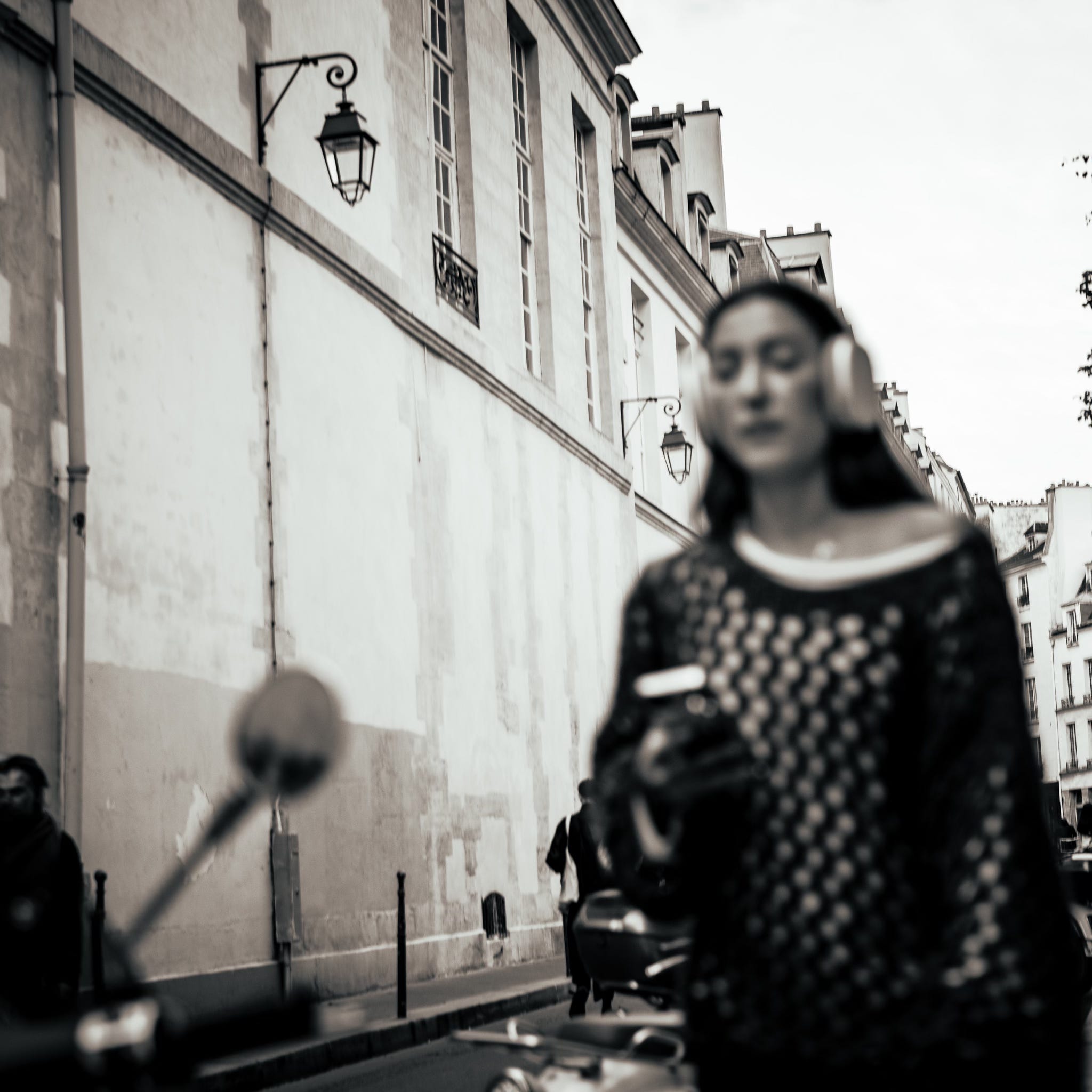
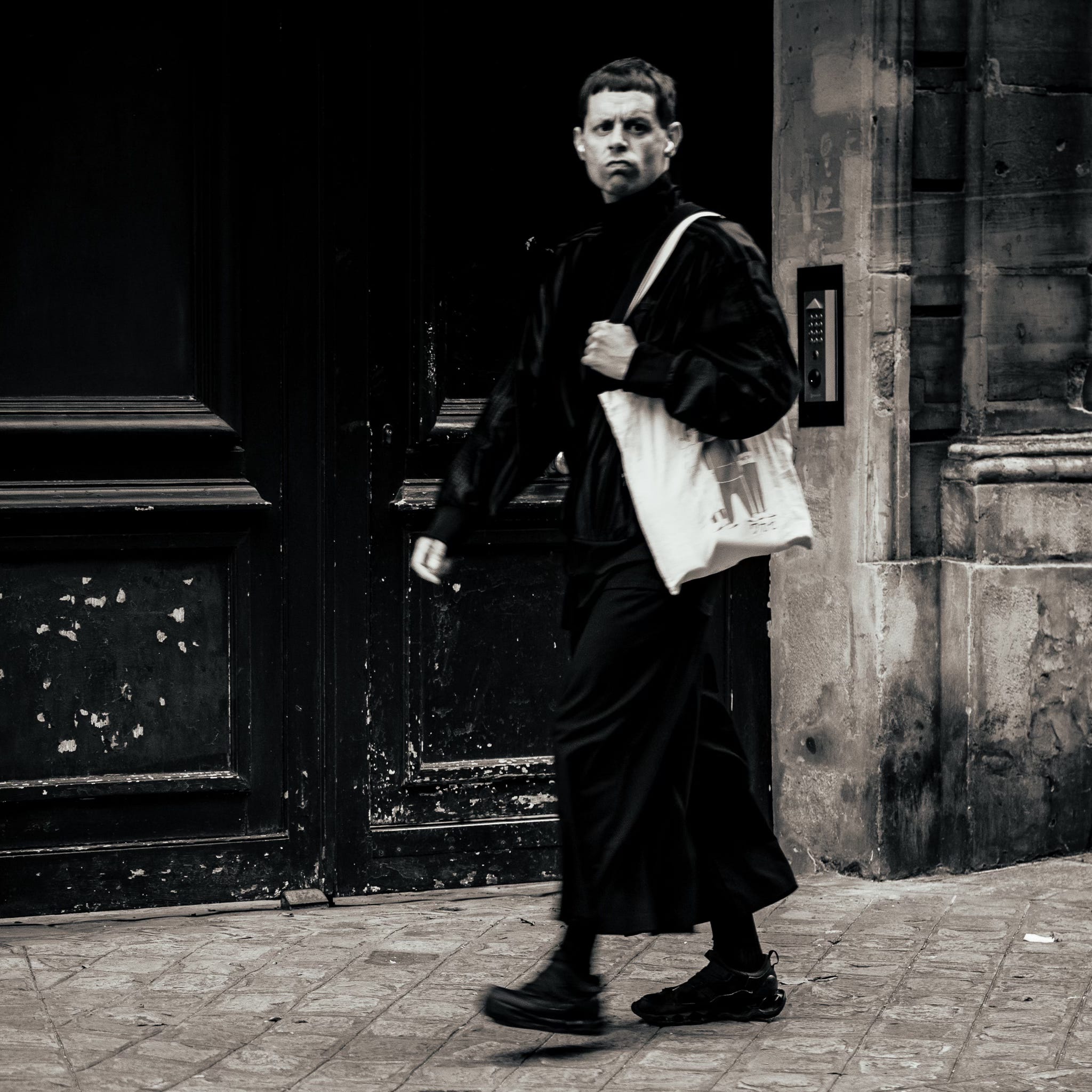
And that’s the punchline, isn’t it? Even the fashionable ones, even the beautiful ones, even the ones floating through the streets with perfect hair and perfect coats—everyone is also just trying to get somewhere. Everyone is carrying a small device of distraction, a coffee cup, a thought they can’t shake. One woman passes half out of focus—headphones like earmuffs against the world—drifting through a pale corridor of buildings as if she’s walking inside her own soundtrack. Paris makes saints of its pedestrians and then immediately returns them to the ordinary.
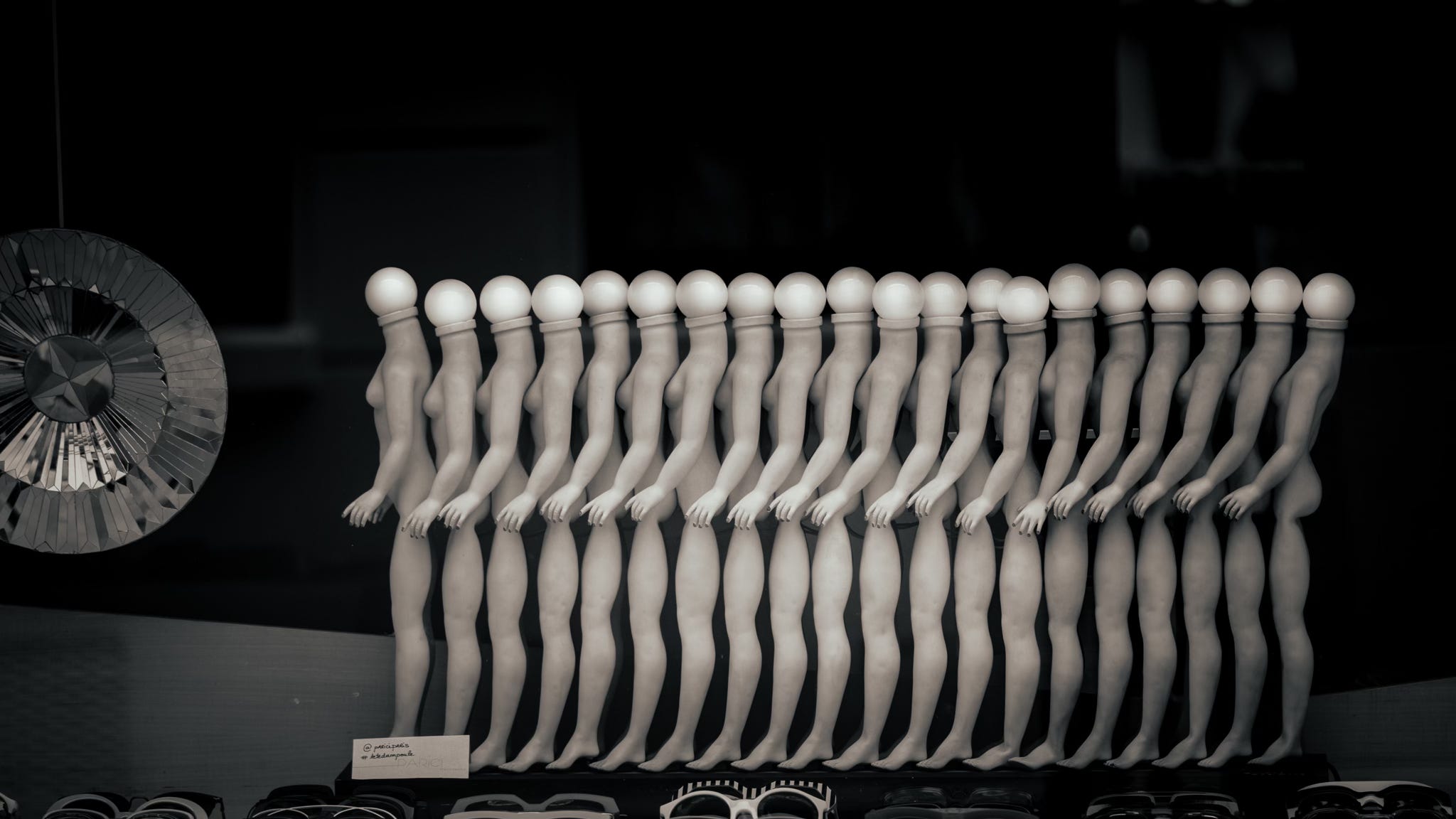
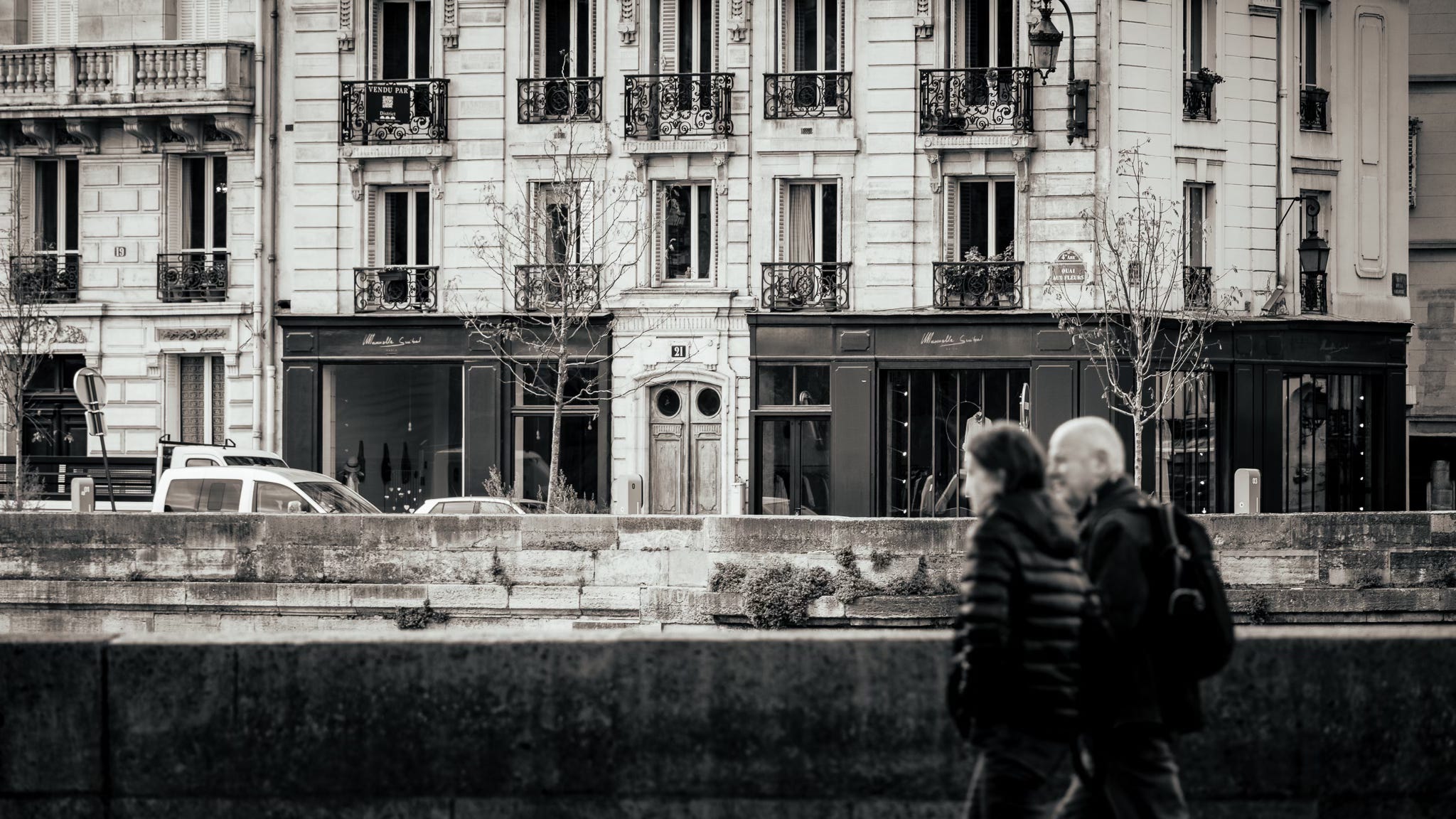
What I love most is the way the city refuses to choose one mood. It is simultaneously theatre and documentary. It gives you the neon and the noir, the warmth and the indifference, the seduction and the shrug. It offers you a perfect corner of light—and then, two steps later, a wall of shadow. You don’t photograph Paris to capture it; you photograph it to admit you were briefly caught in its current.
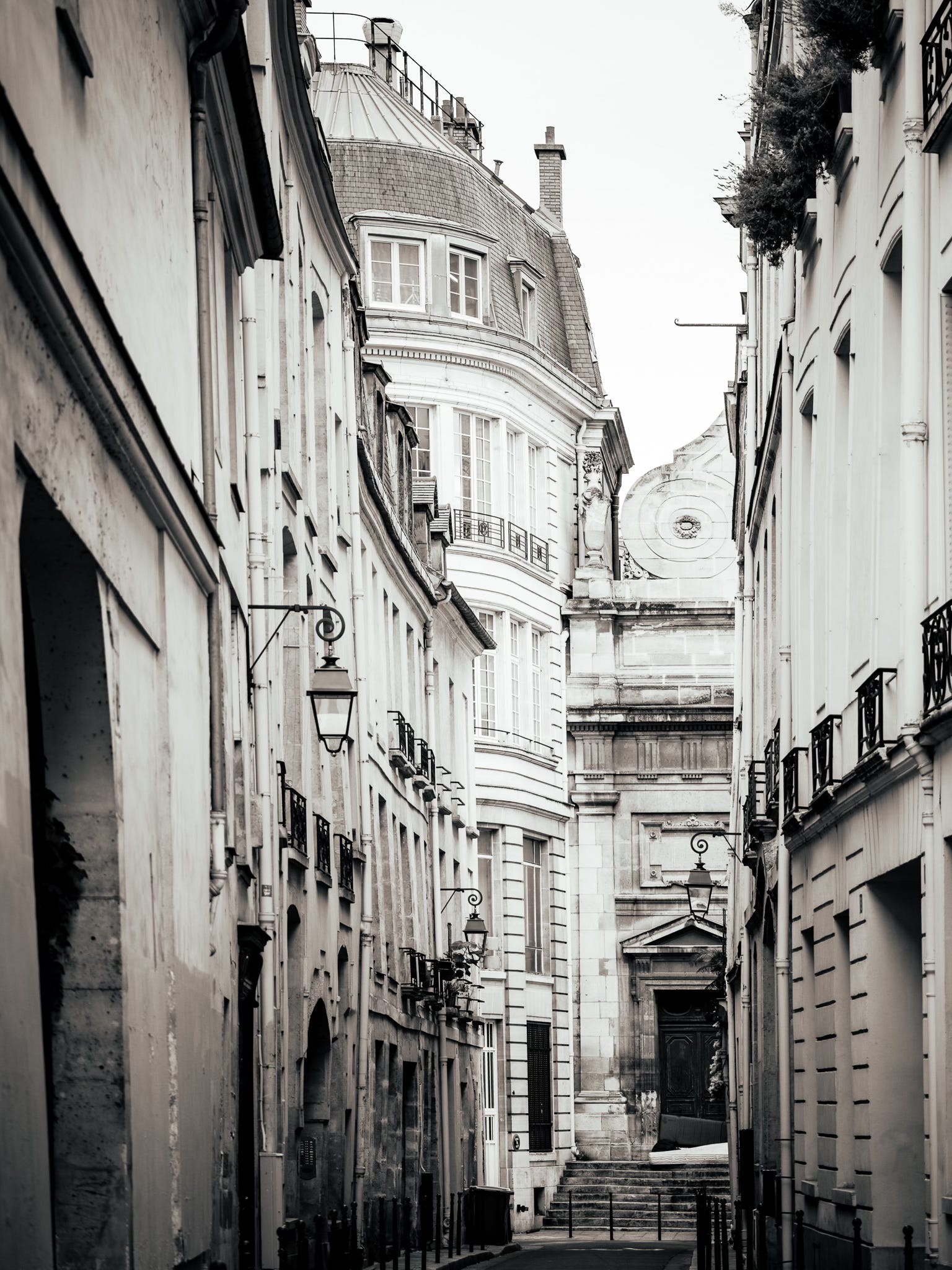
These images are not a map of the city. They’re a pulse. A handful of stutters in time: the blur of motion, the hush of an old door, the flare of colour, the starkness of a face, the human comedy of café chairs waiting like open arms. Proof, if you need proof, that Paris is still doing what it has always done—turning ordinary nights into something just indecent enough to feel like truth.
:: Rand
All images and text are copyright Rand Leeb-du Toit, 2026
Excellent B&W Rand !
Thank you for this celebration of the visual delights of my favorite city.